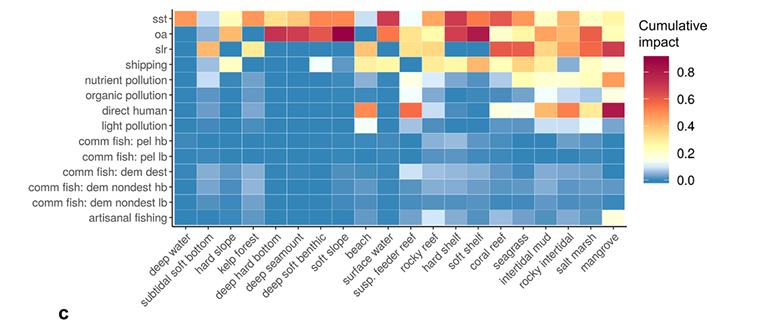
This global study analyses how human pressures on the ocean have changed over time, using high-resolution data on 14 stressors across marine ecosystems worldwide. The authors show that cumulative human impacts increased across nearly 60% of the global ocean between 2003 and 2013, with impacts rising in most coastal waters. Climate change is the dominant driver, mainly through ocean warming, acidification and sea-level rise, while shipping and coastal pressures have increased in many regions, and fishing pressure has generally declined or stabilised, particularly in Europe and North America. These reductions in fishing impacts reflect the effects of improved fisheries management, even as other pressures continue to grow. Overall, the paper shows that climate change now outweighs other human pressures, and that well-managed fisheries play an important role in reducing cumulative impacts but cannot offset global climate drivers.